


A recent global outage has been described as potentially the “largest IT outage in history,” affecting millions of Windows devices worldwide and causing widespread disruption across multiple sectors.
Understanding which systems are affected and how to check their status has become crucial for organisations and individuals navigating through this unprecedented technical failure.
Questions about system down check also connect with bus system architecture backbone when readers compare closely related topics.
The outage affected an estimated 8.5 million Windows devices, with disproportionate effects on critical infrastructure worldwide, including airlines, banks, healthcare facilities, emergency services, and government agencies.
This article will explore the causes of the outage, its widespread impacts, and how to check if your systems are affected.
Understanding the Global IT Outage
A critical software update failure led to a widespread global IT outage in July 2024, exposing the interconnectedness of modern IT systems. This event has raised significant concerns about the resilience of our digital infrastructure.
The Scale and Scope of the Disruption
The global IT outage that began on July 19, 2024, represents one of the most significant technological failures in recent history, affecting critical systems across multiple continents simultaneously.
The disruption revealed the vulnerability of our interconnected digital infrastructure, demonstrating how a single technical issue can cascade across industries and geographical boundaries.
- The global IT outage highlighted the concept of “digital monoculture” – where many organisations rely on the same cloud providers and cybersecurity solutions, creating efficiency but also systemic vulnerability.
- Modern IT infrastructure’s highly interconnected and interdependent nature means that when one component fails, it can trigger a chain reaction impacting other parts of the system.
- As software and networks become increasingly complex, the potential for unforeseen interactions and bugs increases, making comprehensive testing and failsafe mechanisms more crucial than ever.
The outage has underscored the need for robust and resilient IT systems that can withstand such disruptions. Understanding the scale and scope of this disruption is crucial for mitigating future risks.
What Computer System is Down: The CrowdStrike Connection
The global IT outage has been directly linked to CrowdStrike, a major cybersecurity firm. This incident highlights the critical role that cybersecurity software plays in maintaining the integrity of computer systems worldwide.
How a Cybersecurity Tool Caused Worldwide Disruption
A single update automatically rolled out to CrowdStrike Falcon, a ubiquitous cybersecurity tool used primarily by large organisations, caused Microsoft Windows computers around the world to crash. This update was part of the routine operation of CrowdStrike’s software, designed to enhance security measures.
The global outage was directly linked to CrowdStrike, whose Falcon software is used by numerous Fortune 500 companies and government agencies worldwide. CrowdStrike CEO George Kurtz confirmed that the outages were caused by “a defect found in a single content update of its software on Microsoft Windows operating systems,” emphasising that it was not a security incident or cyberattack.
- The Falcon software is particularly prevalent among large organisations, including major global banks, healthcare providers, energy companies, and government agencies.
- The issue specifically affected the Falcon software on Windows operating systems, while Mac and Linux operating systems remained unaffected by the problematic update.
- Despite CrowdStrike’s reputation as a leading cybersecurity provider, this incident demonstrates that even security tools themselves can become vectors for system-wide failures when updates aren’t properly tested.
This incident underscores the importance of rigorous testing of software updates before they are rolled out globally. It also highlights the interconnectedness of modern computer systems and the potential for a single point of failure to have far-reaching consequences.
Timeline of the IT System Failure

The IT system failure that began late on July 18, 2024, was triggered by CrowdStrike’s faulty software update. This event led to a cascade of failures across various sectors globally.
The Outage Unfolds
The faulty software update was deployed to CrowdStrike’s Falcon security product in the late hours of July 18, 2024, into the early hours of July 19, 2024. Within hours, widespread system failures were reported worldwide as Windows computers displayed the “blue screen of death” and became inoperable.
Key events in the timeline include:
- The IT system failure began late Thursday, July 18, 2024, into the early hours of Friday, July 19, when CrowdStrike deployed a faulty software update.
- By Friday morning, the outage had reached critical mass, affecting major airlines, hospitals, and financial institutions.
- CrowdStrike identified the issue and deployed a fix relatively quickly, but the effects continued to impact organisations for days.
- The timeline of recovery varied significantly across different sectors and organisations.
For more detailed information on the outage, you can refer to the Wikipedia article on the 2024 CrowdStrike-related IT. The manual intervention required to restore affected systems prolonged the recovery time.
How the CrowdStrike Update Caused the Blue Screen of Death

A faulty update from CrowdStrike led to the infamous blue screen of death on millions of Windows devices worldwide. The issue arose when a defective content update was automatically pushed to systems running the CrowdStrike Falcon security software.
Technical Explanation of the System Failure
The technical issue stemmed from a defect in a content update for Windows hosts. When the problematic update was installed, it created a critical conflict within the Windows operating system that prevented the computers from booting properly, resulting in the characteristic blue error screen.
The severity of the issue was compounded by the fact that affected computers could not be fixed remotely – each machine required manual intervention by IT staff to delete the problematic code and restore functionality.
The key points to understand about this incident are:
- The infamous “blue screen of death” (BSOD) appeared on millions of Windows devices worldwide when the faulty CrowdStrike update was deployed, rendering computers completely inoperable.
- The technical issue stemmed from a defect in a content update for Windows hosts that was automatically pushed to systems running the CrowdStrike Falcon security software.
- When the problematic update was installed, it created a critical conflict within the Windows operating system that prevented the computers from booting properly, resulting in the characteristic blue error screen.
- The severity of the issue was compounded by the fact that affected computers could not be fixed remotely – each machine required manual intervention by IT staff to delete the problematic code and restore functionality.
- This incident highlighted a significant vulnerability in how security software interacts with operating systems, as the very tools designed to protect computers became the vector for their failure.
This incident underscores the importance of rigorous testing for update windows hosts and content update windows to prevent such widespread disruptions in the future.
Global Impact on Transportation Systems
Transportation systems worldwide faced unprecedented disruptions due to the CrowdStrike outage, highlighting the fragility of modern infrastructure.
Airlines and Public Transit Disruptions
The Azure outage had far-reaching consequences, disrupting services across multiple sectors, including airlines, retail, banking, and media. Not only in the United States but also internationally in countries like Australia and New Zealand.
Transportation systems were among the hardest hit by the outage, with airlines experiencing particularly severe disruptions that continued for days after the initial incident.
- Major carriers including Delta Air Lines, American Airlines, United Airlines, and Turkish Airlines were forced to ground flights, with Delta alone cancelling more than 3,500 flights through the weekend following the outage.
- The disruption to airline reservation systems, check-in processes, and flight operations created chaos at airports globally, with thousands of travellers stranded and unable to reach their destinations.
- Public transportation in several major cities was also impacted, with systems in Washington, D.C., and Pennsylvania temporarily suspending operations before restoring services on Friday.
- Even four days after the initial outage, airlines continued to experience significant disruptions, with hundreds of flights still being cancelled or delayed as systems gradually returned to normal operations.
The outage affected not just airlines but also had a ripple effect on the overall travel experience, causing inconvenience to millions of passengers worldwide.
Healthcare Systems Affected by the Outage

Global healthcare services were severely impacted by a massive IT outage, affecting patient care and medical services. The disruption was widespread, with numerous healthcare systems reporting issues.
Impact on Patient Care and Medical Services
The IT outage resulted in significant disruptions to healthcare operations worldwide. Many hospitals were forced to delay non-emergency procedures and appointments as their computer systems became inoperable.
Major medical centres, including Mass General Brigham, Penn Medicine, Mount Sinai Health System, and Emory Healthcare, reported that the outage affected their ability to access electronic health records and other critical patient information.
- Healthcare systems across the globe experienced significant disruptions, with many hospitals forced to delay non-emergency procedures and appointments.
- Some cancer treatment centres, including Dana-Farber Cancer Institute and Memorial Sloan Kettering Cancer Center, had to pause certain procedures and scheduled appointments.
- England’s National Health Service reported disruptions to general practitioner practices due to the impact on their appointment booking and patient records system.
While most healthcare providers implemented downtime protocols and reverted to paper-based systems, the incident highlighted the sector’s growing dependence on digital infrastructure.
Financial Services and Banking Disruptions
The recent global outage had far-reaching consequences for the financial sector, affecting banks and other financial institutions. The disruption caused by the CrowdStrike outage was widespread, impacting various aspects of financial services.
Impact on Financial Institutions
Financial services and banking operations were severely impacted, with many institutions experiencing disruptions to their customer-facing services and internal operations. Banking customers in multiple countries reported difficulties accessing online banking portals, mobile applications, and ATM services as financial institutions’ systems went offline.
Key effects of the outage included:
- Payment processing systems were compromised in many regions, affecting retail transactions and creating challenges for businesses relying on electronic payment methods.
- Trading platforms and financial market operations experienced delays and disruptions, though most major exchanges implemented contingency plans to maintain critical functions.
- The Federal Reserve and other central banking authorities monitored the situation closely, with the U.S. Securities and Exchange Commission stating it was “monitoring for market-related impacts” even as it confirmed its own system was unaffected.
The outage highlighted the vulnerability of financial companies to IT disruptions. As the financial sector continues to recover, it is crucial for institutions to implement robust measures to prevent such disruptions in the future.
Emergency Services and Government Agency Impacts
The recent IT disruption highlighted vulnerabilities in emergency services and government operations. The widespread outage affected various critical infrastructure, including emergency call centres and government agencies.
Critical Infrastructure Challenges
Emergency services in several regions experienced concerning disruptions. Notably, 911 call centres in parts of Arizona and Alaska were temporarily unable to receive emergency calls before services were restored. Government agencies at federal, state, and local levels faced significant operational challenges, with many offices forced to suspend services temporarily as their computer system failed.
- Social Security Administration offices and Department of Motor Vehicles locations had to pause operations, creating backlogs and delays for citizens.
- Law enforcement agencies reported varying levels of impact, with some police departments experiencing difficulties accessing criminal databases.
| Agency | Impact | Response |
|---|---|---|
| 911 Services | Temporary disruption | Restored quickly |
| Government Offices | Operational suspension | Manual workarounds implemented |
| Law Enforcement | Difficulty accessing databases | Alternative methods used |
The outage and its impacts on these critical services underscore the need for robust backup systems and contingency planning. While most critical emergency infrastructure had redundancy measures in place, the incident highlighted potential vulnerabilities in public safety systems that rely on networked technology.

Retail and Hospitality Sector Disruptions

The recent IT outage significantly affected retail and hospitality businesses worldwide, leading to various operational challenges. The service disruptions were particularly felt across these sectors, impacting both customer experience and business operations.
Impact on Businesses and Consumers
Major hotel chains, including Marriott International and some Hilton hotels, reported significant issues with their reservation systems, payment processing capabilities, and check-in procedures. This resulted in frustrating delays for travellers.
Retailers faced challenges with point-of-sale systems, inventory management, and online ordering platforms. Many stores were unable to process electronic payments during the height of the outage.
- The retail and hospitality sectors experienced widespread service disruptions that directly impacted both business operations and consumer experiences across the globe.
- Major hotel chains reported significant issues with their reservation systems, payment processing capabilities, and check-in procedures.
- Retailers like Starbucks faced challenges, with its mobile ordering system failing and causing chaos at stores.
- Entertainment venues were also impacted, with theatres like the Fulton Theater reporting they couldn’t process tickets.
These disruptions highlighted the dependency of modern business operations on functioning computer systems and the need for robust IT infrastructure to mitigate such disruptions in the future.
How to Check if Your System is Affected
Checking if your system is affected by the recent CrowdStrike outage is crucial for resolving potential issues promptly. The first step involves identifying the symptoms of the outage on your computers.
Identifying and Diagnosing Outage-Related Issues
If you suspect your system may be affected, look out for the following signs:
- If you encounter the “blue screen of death” on Windows computers that prevents normal operation and startup.
- For organisations using CrowdStrike Falcon security software, IT departments should check if their Windows devices are running the affected version of the software.
- Individual users can determine if their system is impacted by attempting to boot their computer normally; failure to start and display error messages, particularly referencing memory management or system files, may indicate an issue.
- Organisations should consult CrowdStrike’s official technical support portal and blog for the most up-to-date guidance.
- If your system is affected, be aware that the fix typically requires manual intervention by IT personnel with administrator access.
To troubleshoot the problem, follow these steps:
1. Check for the “blue screen of death.”
2. Verify the version of CrowdStrike Falcon security software.
3. Attempt to boot the computer in safe mode.
4. Consult official CrowdStrike resources for guidance.
By following these steps, you can identify and potentially resolve the issues caused by the CrowdStrike outage on your system.
Recovery Efforts and Technical Solutions

Recovery efforts for the CrowdStrike outage have been complex, involving manual intervention for each affected system. The process has proven to be challenging and time-consuming, as IT personnel must physically access affected machines to resolve the issue.
Restoring Affected Systems
The technical solutions involve logging in with administrator credentials and deleting the problematic code that caused the system failure. For large organisations with thousands of affected devices, the recovery process has been particularly daunting.
Limited IT staff have struggled to address the sheer volume of impacted computers. Airlines and other transportation providers faced especially complex recovery challenges due to their globally distributed systems.
- Recovery efforts for affected systems have proven challenging and time-consuming.
- Technical solutions involve IT personnel physically accessing affected machines.
- CrowdStrike has deployed a fix for the underlying issue and provided detailed technical guidance.
CrowdStrike has acknowledged that full recovery will take time due to the manual nature of the remediation process. The update to the software has been critical in resolving the issue, but the complexity of the technology involved has added to the challenge.
As organisations work to restore their systems, the importance of robust recovery efforts and reliable technology cannot be overstated. The CrowdStrike outage serves as a reminder of the need for resilient digital infrastructure and effective update mechanisms.
CrowdStrike’s Response and Accountability
Following the IT outage, CrowdStrike’s CEO was at the forefront of the company’s response efforts. CEO George Kurtz issued multiple public statements throughout the crisis, acknowledging the company’s responsibility for the outage and apologising to affected customers.
Effective Communication During the Crisis
In his communications, CEO George Kurtz emphasised that the issue was “not a security incident or cyberattack” but rather “a defect found in a single content update” for Windows hosts. This clarification was crucial in maintaining trust in CrowdStrike’s security capabilities.
CrowdStrike established dedicated communication channels through its official blog and technical support portal to provide customers with legitimate guidance. This proactive approach helped prevent them from falling victim to potential scams exploiting the situation.
- CrowdStrike committed to “full transparency on how this occurred and steps we’re taking to prevent anything like this from happening again.”
- By Sunday evening, CrowdStrike reported that “a significant number” of the 8.5 million affected devices had been successfully restored.
The company’s commitment to transparency and customer support was evident in its handling of the CrowdStrike outage. CEO George Kurtz’s leadership played a crucial role in navigating the crisis.
Microsoft’s Role and Response

In response to the CrowdStrike outage, Microsoft’s CEO Satya Nadella emphasised the company’s collaborative efforts with the cybersecurity firm. Microsoft played a crucial role in addressing the global IT outage, despite initial confusion about whether the company’s own systems were the source of the problem.
Collaboration Between Tech Giants
Microsoft CEO Satya Nadella publicly acknowledged the situation, confirming that Microsoft was “working closely with CrowdStrike and across the industry” to support customers in restoring their systems. The relationship between Microsoft Windows and CrowdStrike’s security software highlighted the complex interdependencies in modern technology ecosystems.
The outage affected an estimated 8.5 million Windows devices, less than one percent of all Windows machines according to Microsoft, but the strategic importance of those systems created disproportionate global impacts. Microsoft provided technical guidance to help users recover their systems after the faulty update. The company’s collaboration with CrowdStrike was notable, given their typically adversarial relationship.
Microsoft’s response to the crisis demonstrated its commitment to supporting customers through challenging situations. By working closely with CrowdStrike and providing timely update guidance, Microsoft helped mitigate the impact of the outage.
Economic Impact and Potential Costs
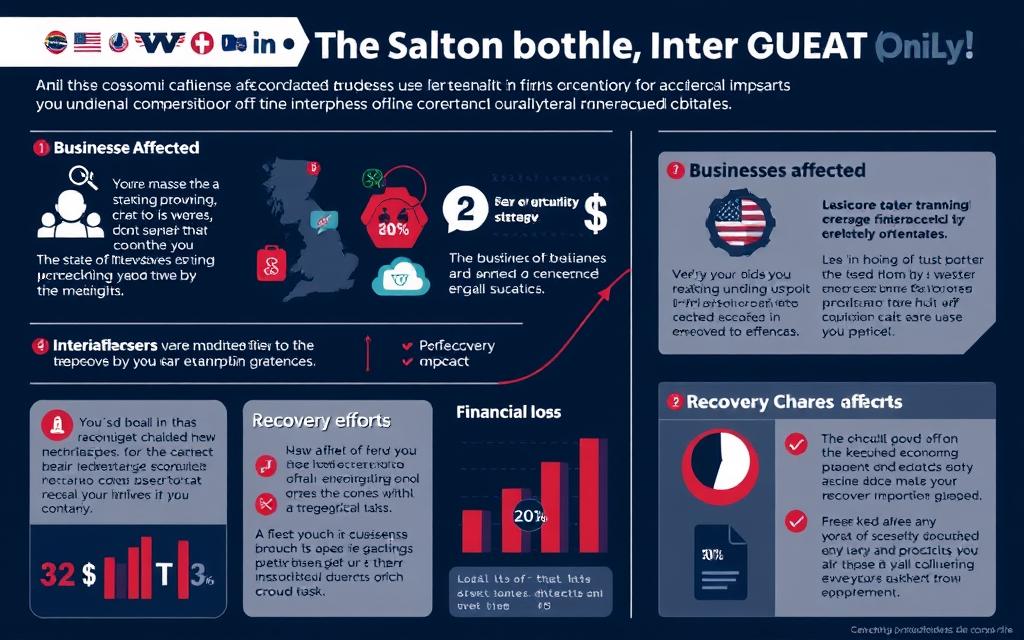
The financial consequences of the global IT outage have been severe, affecting multiple industries. Preliminary estimates suggest that the costs could exceed $1 billion, as stated by Patrick Anderson, CEO of Anderson Economic Group.
Financial Consequences
The economic impact has been felt across various sectors. Airlines have suffered significantly due to thousands of cancelled flights and the costs associated with accommodating stranded passengers.
- The economic impact of the global outage has been substantial, with preliminary estimates suggesting costs could exceed $1 billion.
- Financial consequences have been felt across multiple sectors, with airlines suffering particularly severe losses.
- Businesses in retail, hospitality, and financial services experienced significant revenue losses during the outage.
- The stock market reflected immediate concerns, with CrowdStrike shares dropping by 11% on the day of the outage.
- Questions remain about potential compensation for affected customers, with many organisations reviewing their service level agreements.
The outage has highlighted the vulnerability of modern business operations to IT disruptions. As companies recover, they are likely to reassess their reliance on critical cybersecurity tools and their preparedness for potential future disruptions.
Lessons Learned: Preventing Future IT Disasters
The unprecedented scale of the recent IT outage has sparked a critical examination of the digital systems that underpin modern businesses and economies. As organisations reflect on the disruption caused, several key strategies have emerged to prevent similar incidents in the future.
Enhancing System Resilience
To build more resilient digital infrastructure, companies are advised to adopt a multi-cloud strategy. This involves distributing their IT systems across multiple cloud service providers, ensuring that if one provider experiences an outage, others can continue to support critical operations.
- Avoiding “digital monoculture” by diversifying technology stacks to prevent widespread failures.
- Implementing redundancy into critical systems to ensure business continuity.
- Conducting rigorous testing protocols for software updates, particularly for security tools.
| Strategy | Benefits |
|---|---|
| Multi-cloud strategy | Prevents single points of failure, ensuring continuous operation. |
| Redundancy in critical systems | Maintains business continuity during outages. |
| Rigorous testing protocols | Reduces the risk of faulty updates causing widespread disruption. |
By adopting these strategies, organisations can significantly reduce the risk of future IT outages and enhance the resilience of their digital infrastructure.
Conclusion: The Fragility of Digital Infrastructure
The outage serves as a stark reminder of the importance of resilience in our digital infrastructure. As we continue to rely heavily on technology, the need for robust and reliable systems becomes increasingly evident.
The global outage of July 2024 demonstrated how a single point of failure in a widely-used security tool could cascade into worldwide disruption, affecting critical services across healthcare, transportation, finance, and government sectors. This incident highlighted the vulnerability of our interconnected digital world.
Building Resilience
To prevent such incidents in the future, organisations must strike a balance between the efficiency benefits of standardised technology solutions and the resilience advantages of diversification and redundancy. As our dependence on digital systems grows, so too must our investment in making these systems more robust and capable of graceful degradation rather than catastrophic failure when problems inevitably arise.
The key takeaways from this incident are:
- The importance of diversifying technology solutions to mitigate the risk of single-point failures.
- The need for robust testing and validation procedures to identify potential vulnerabilities.
- The value of implementing redundancy in critical systems to ensure continued functionality during outages.
- The requirement for ongoing investment in digital infrastructure to enhance resilience.
- The necessity of developing strategies for graceful degradation in the event of future outage incidents.
In conclusion, while a complete “internet apocalypse” is highly unlikely, the interconnected nature of our digital world means that any large outage will have far-reaching impacts. Continual adaptation and preparedness are vitally important to ensure the resilience of our global communications infrastructure and the technology that underpins it.
FAQ
What caused the global IT outage?
The global IT outage was caused by a software update issued by CrowdStrike, a cybersecurity firm, which led to a widespread disruption of Microsoft Windows-based systems.
How did the CrowdStrike update affect Microsoft Windows systems?
The update caused the Blue Screen of Death on numerous Windows machines, resulting in disruptions to various services and operations worldwide.
Which sectors were impacted by the outage?
The outage affected multiple sectors, including airlines, financial services, healthcare, emergency services, and retail, leading to significant disruptions and losses.
How did the outage affect airlines and public transit?
The outage caused flight disruptions and delays in airlines, while public transit systems were also affected, resulting in inconvenience to passengers.
What steps is CrowdStrike taking to address the issue?
CrowdStrike’s CEO, George Kurtz, has acknowledged the issue and is working to resolve it. The company is taking steps to rectify the problem and prevent similar outages in the future.
How can I check if my system is affected by the outage?
To check if your system is affected, you can update your Windows hosts and look out for any diagnostic issues related to the outage.
What are the potential economic impacts of the outage?
The outage is likely to have significant economic impacts, including losses to businesses and financial institutions, as well as costs associated with recovery efforts.
How can organisations prevent similar IT disasters in the future?
Organisations can take steps to build more resilient digital infrastructure by implementing robust cybersecurity measures and ensuring effective collaboration between tech giants.

 By
By